
Preconditioning Your Tesla Battery: The Complete Guide
Preconditioning prepares your Tesla for driving or charging by managing the temperature of the cabin and battery. In cold weather, it can make your drive more comfortable and help restore regenerative braking. Before a fast charge, navigating to a supported charger lets the car prepare the battery for charging.
For a planned trip, use Schedule in your Tesla or the app to prepare for your departure. For a Supercharger, select the charging stop in the car’s navigation. These serve different purposes, and the time and energy needed depend on conditions.
What is Preconditioning?
Preconditioning prepares your Tesla for driving or charging by managing temperature. A warm cabin makes a cold-weather drive more comfortable, and preparing a cold battery can improve regenerative braking or fast-charging performance. Results depend on conditions.
How to Precondition your Tesla Battery
You can prepare your Tesla for driving or fast charging using these features:
- Tesla App
- Navigation feature
- Scheduled Departure feature
- Drag Strip Mode (a separate performance feature on supported Model S and Model X vehicles)
1. Precondition with the Tesla App
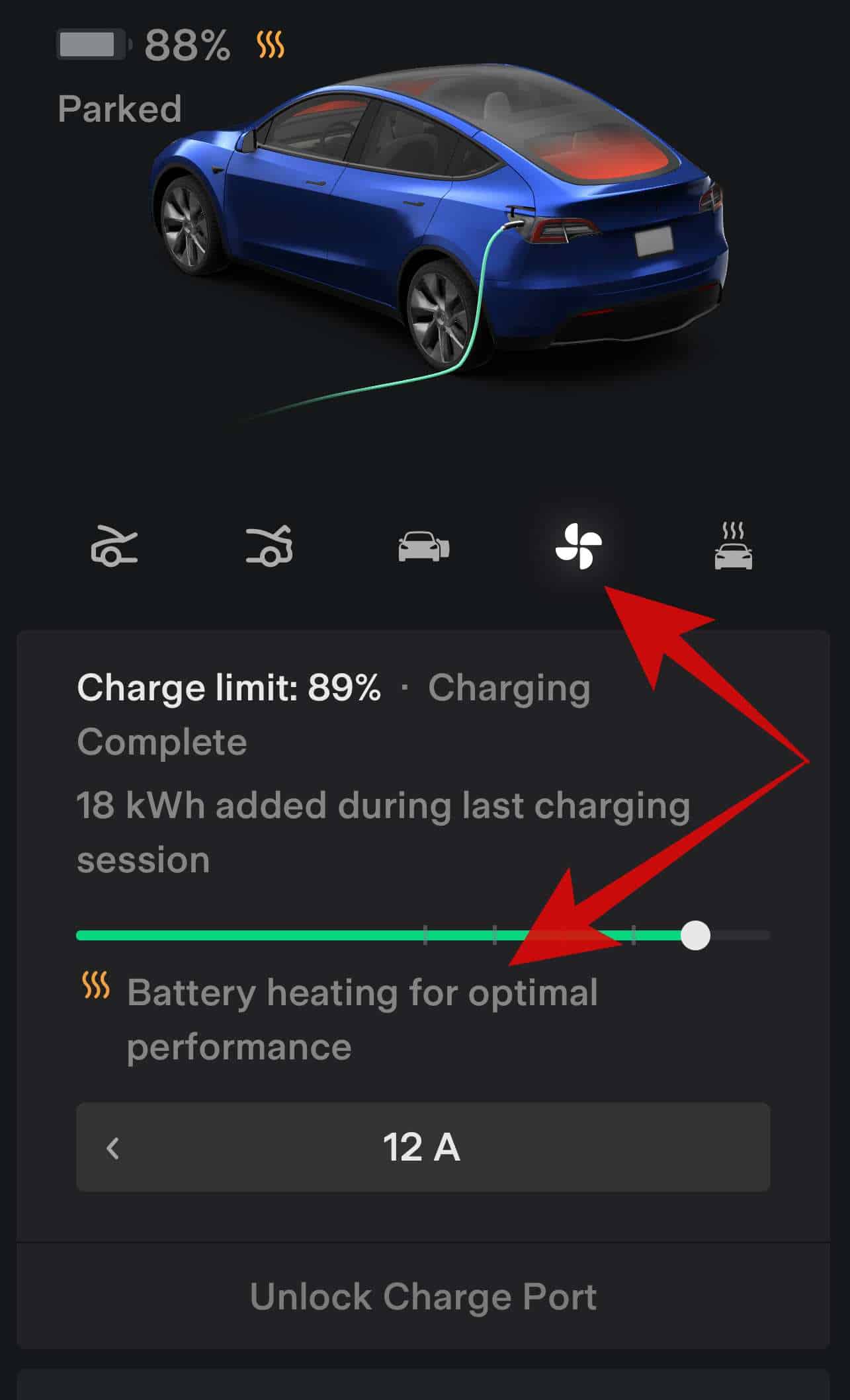
Use Climate in the Tesla app to prepare the cabin before driving. Tesla says app preconditioning also warms the battery as needed. Defrost can help clear the windows. Controls and appearance can vary by vehicle and software. EVehiclePro Tip: Plug in while preconditioning when practical to help preserve energy for your drive.
- Climate: Open the Tesla app, tap Climate, and turn it on to prepare the cabin before driving.
- Defrost: In Climate, use Defrost to help clear snow, ice or frost. The control’s appearance and location can vary by app version.
- Quick controls: If available, use a climate shortcut on the app’s home screen.
If ice has already locked your handle or door, see my guide to opening a frozen Tesla door.
You can also use the Scheduled Departure feature in the Tesla app to precondition your battery.
- Tap Schedule, choose a location and start a new schedule.
- Select Precondition and choose the time and days you want the car ready.
- Tap Create. Menu names and controls may vary by app and vehicle software.
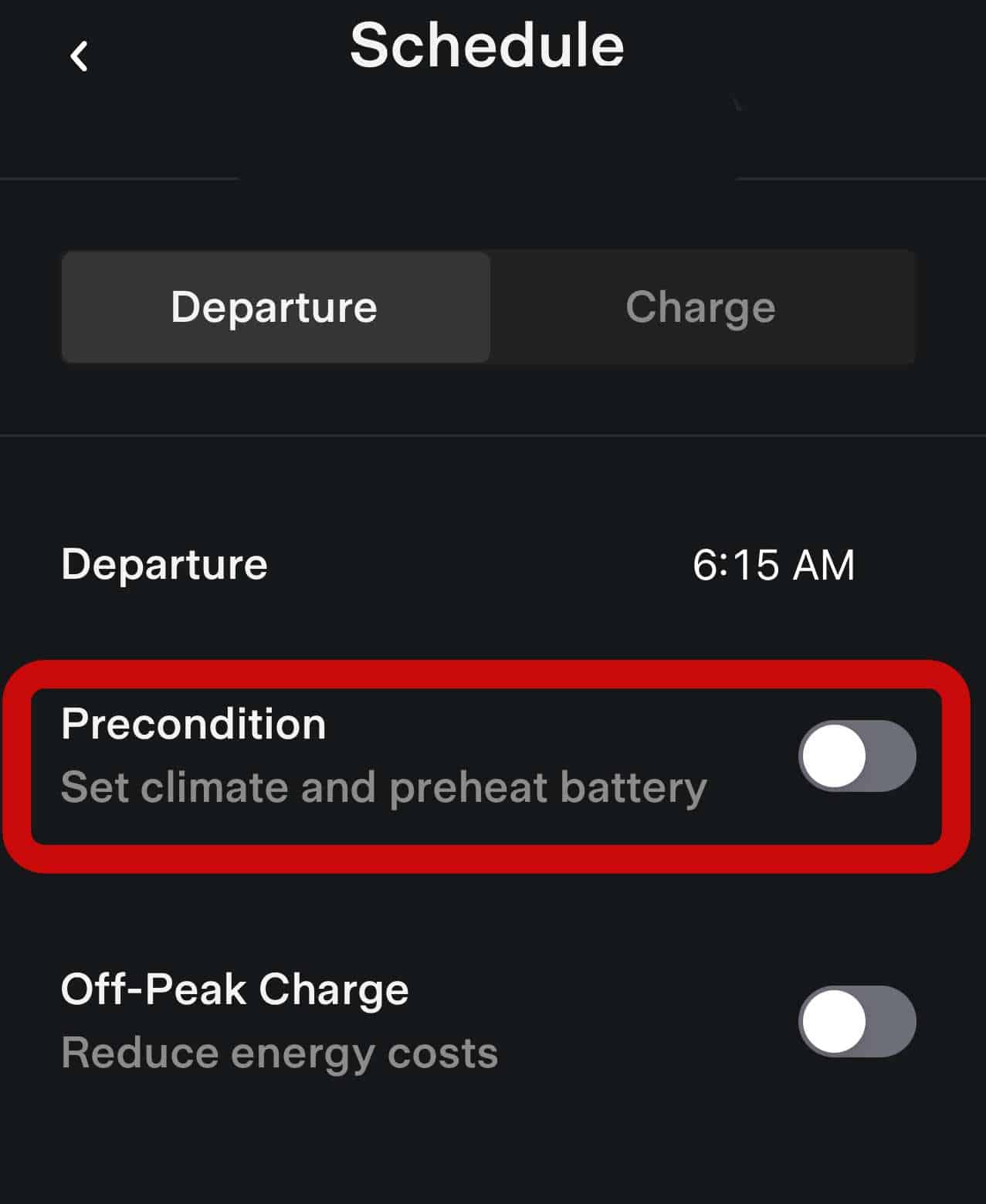
When scheduled, the vehicle prepares the cabin and battery for departure. This does not guarantee that the battery has reached its fast-charging temperature.
2. Precondition Using the Navigation Feature
If you’re preparing to charge at a Supercharger, use the Navigation feature on your touchscreen before supercharging.
Simply navigate to a Supercharging station on your screen. The car manages battery preparation as you approach when needed.
3. Precondition Using the Scheduled Departure Feature
Tesla owners with a predictable schedule can use Schedule to prepare the car for daily commutes. On the touchscreen, tap Controls > Schedule, choose a location, select Precondition, and set the time and days. You can also use Schedule in the Tesla app. For example, if you leave at 7:00, set 7:00 as your departure time; the vehicle determines when to start. Menus and availability vary by model and software.
4. Drag Strip Mode for Performance
Supported performance versions of the Model S and Model X have Drag Strip Mode. It prepares the battery and drive unit for timed acceleration, uses additional energy, and is separate from preparing for a charge. Availability and preparation time vary by vehicle and conditions. Check your vehicle’s manual for its instructions.
Why Precondition the Tesla Battery?
Depending on the conditions, preconditioning can:
- make your vehicle more efficient at accepting a charge and supercharge
- prepare the battery for driving or fast charging
- preserve your Tesla range
- make your drive more comfortable
- help prepare the vehicle for cold weather
- optimize regenerative braking
- reduce some energy used after departure when the vehicle is plugged in beforehand
Precondition the Battery for Fast Charging
Preparing a cold battery for fast charging can improve its charging rate and reduce the time spent supercharging. Actual speed also depends on the charger, battery charge level and other conditions.
Precondition to Optimize Regenerative Braking
One of Tesla’s features is regenerative braking.
When your vehicle is moving and you take your foot off the accelerator, regenerative braking slows down your vehicle and feeds any surplus energy back into your battery.
A cold or highly charged battery can limit regenerative braking. Warming a cold battery can help, but always be prepared to use the brake pedal. Some vehicles offer an optional setting to apply friction brakes when regenerative braking is limited.
How Do I Know If My Regenerative Braking is Reduced?

Read more about “Regenerative braking temporarily reduced” warning here.
The following indicators may help identify reduced regenerative braking. Display details vary by vehicle and software:
Blue Snowflake
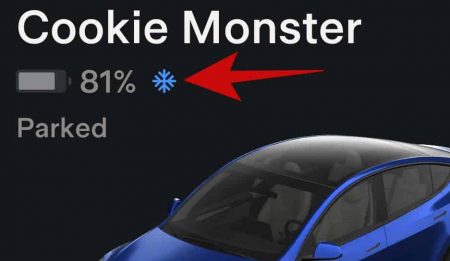
During cold weather conditions, a blue snowflake may appear on the screen when some of the energy stored in the battery is not available. In this case, regenerative braking and charging speeds may be limited. Once the battery is warmed, the snowflake will disappear.
Regenerative Braking Line
On some Tesla displays, you can tell that your regenerative braking is reduced by looking at the line at the top left of your screen. The left side of this line refers to your regenerative braking. When regenerative braking is reduced you will see multiple dots. The more dots you see on the left side of the line, the less regenerative braking you have.

Indicator Light

Tesla has added a new indicator light that appears next to the the other indicator lights (headlight, high beams). This symbol indicates that regenerative braking is limited. Friction-brake assistance depends on the vehicle and whether the relevant setting is enabled; be prepared to use the brake pedal.
Activate “Apply Brakes When Regenerative Braking Is Limited”
Tesla has released an update that now allows drivers to enable the vehicle to apply regular brakes when regenerative braking is limited. This feature helps the vehicle slow down in a more predictable manner, more like regenerative braking.
If available on your vehicle, tap
Controls > Pedals & Steering > Apply Brakes When Regenerative Braking Is Limited
Drag Strip Mode
On supported Model S and Model X performance vehicles, Drag Strip Mode prepares the battery and drive unit for timed acceleration. Preparation time and performance vary with the vehicle and conditions.
How Long Should You Precondition a Tesla Battery Before Charging?
There is no single preparation time for every charge. Battery temperature, weather and the drive to the charger all matter. For fast charging, select the charging stop in the vehicle’s navigation and allow the car to manage preparation.
How Long Should You Precondition a Tesla Battery before Traveling?
Tesla’s cold-weather guidance explains that preparation time varies. Set your planned departure time in Schedule and the vehicle determines when to start. Our EVehiclePro tip is to plug in when practical, since preconditioning uses energy.
How Long to Precondition Before Supercharging?
Tesla’s cold-weather manual suggests considering preconditioning before driving if the trip to a Tesla charging location is less than 30–45 minutes. This is not a fixed minimum for every charging session.
For a Supercharger trip:
- Before departure, use Climate or Schedule to prepare the vehicle for driving if needed.
- Use the vehicle’s Navigation to select the Supercharger, or use Trip Planner when it adds a charging stop. The car manages battery preparation on the way.
- Allow extra time in cold weather. Preparing for departure does not guarantee the battery is at its fast-charging target.
How Long Should You Precondition Before Charging at a Non-Supercharger or Destination Charger?
Teslas can use Destination Chargers and compatible non-Tesla chargers. Destination and home chargers generally supply AC power, while fast chargers supply DC power; their charging speeds differ. You do not need a universal 30–45-minute preparation before an AC charge.
For a compatible third-party fast charger:
- Check that the charger and connector are compatible with your vehicle; an adapter or hardware support may be needed.
- In some regions, navigating to a supported third-party fast charger shown in the car can trigger automatic battery preparation. Availability varies by vehicle, software and region. Check your owner’s manual and charging map.
How I Utilize the Precondition Feature for Daily Commutes and Unplanned Trips
For those of us who rely on our Tesla for daily commutes, the Scheduled Departure feature is nothing short of a godsend. Using the Tesla app, I set our departure time for workdays, ensuring that the car is warm and ready to go when we are. The app allows me to turn on the slider for Preconditioning, which not only warms up the battery for optimized performance but also adjusts the cabin temperature to the last setting. This level of automated convenience is invaluable for seamless morning routines.
However, life is full of unexpected turns, and there are days when I need to use the Tesla unplugged and unplanned. For such occasions, the Tesla app once again comes to the rescue. A quick tap on the Climate controls within the app preheats the vehicle before I even step out the door. This is especially useful for warming up the car in cold weather, improving both my comfort and the vehicle’s performance. The Tesla app makes it incredibly easy to toggle this feature on, meaning that whether my trips are planned or spontaneous, I can always count on a preconditioned, efficient, and comfortable drive.
FAQ
How much does pre-conditioning cost?
Preconditioning uses electricity. The cost depends on how much energy your vehicle needs and your electricity rate. This AutoTrader example describes one test; your results will vary. Plugging in can help preserve energy for driving.
What do these 3 orange lines mean in the Tesla App?

Tesla’s Model 3 manual says twisting red lines beside the battery icon indicate the battery is actively heating, including while charging or preparing to charge. Some owners call them “bacon strips.” Appearance may vary by app version; the lines do not by themselves confirm the battery has reached its fast-charging temperature.
Do I need to precondition before charging my battery at home?
You generally do not need to manually precondition just to plug in at home. In cold weather, the vehicle manages battery heating as needed for charging. You can schedule preconditioning for departure to prepare the cabin and battery for driving.
Do I need to precondition my Tesla battery in the summer?
In summer, preconditioning can make the cabin more comfortable before you leave:
- Preconditioning helps maintain a comfortable cabin temperature especially during the summer heat;
- The vehicle manages battery temperature as needed;
- The energy used depends on the weather and settings;
- Plugging in when practical can help preserve battery charge for your drive.
Note that preconditioning the battery when the vehicle is not plugged in will consume energy from the battery, so try to precondition your Tesla when it’s charging.
EVehiclePro.com – 𝐑𝐞𝐚𝐥 𝐓𝐞𝐬𝐥𝐚 𝐃𝐫𝐢𝐯𝐞𝐫𝐬. 𝐄𝐱𝐩𝐞𝐫𝐭 𝐀𝐝𝐯𝐢𝐜𝐞.